
Attorney & Author

David F. Walbert

One of the nation's preeminent constitutional and voting rights litigators.

David F. Walbert
“When this David battles a Goliath, better not bet on the big guy.” — Atlanta Journal-Constitution
About

A Career of Conviction

Throughout his five-decade career, David F. Walbert evolved from a student of theoretical physics into one of the nation's preeminent constitutional and voting rights litigators.

Known for a career that often pitted himself against systemic injustice, Walbert has fundamentally reshaped the political landscape of Georgia and the American South through high-stakes litigation and repeat appearances before the United States Supreme Court.

Academic Foundation: From Physics to the Bar

Walbert's path to the law was unconventional. He holds an undergraduate degree from Stanford University and a Master's degree in physics from the University of Michigan. Though originally destined for a career as a physicist, the moral complexities of the Vietnam War and a desire to engage more directly with people led him to law school.

He attended Case Western Reserve University, where he graduated at the top of his class and served as the Editor-in-Chief of the Law Review.

Following graduation, he completed a formative clerkship under the Honorable Gus J. Solomon of the U.S. District Court for the District of Oregon, a legendary judge whose toughness and commitment to civil liberties left a lasting imprint on Walbert's litigation style.

A Career Defined by Voting Justice

In 1973, Walbert moved to Georgia to join Georgia Indigent Legal Services (GILS), initially serving as a poverty lawyer for the state's most vulnerable citizens. He quickly became a central figure in the "never-ending fight" to overturn laws designed to maintain white supremacy in the electoral process.

Landmark Litigation & Supreme Court Advocacy

Walbert has been lead counsel in several cases that serve as the bedrock of modern voting rights jurisprudence:

  • Rogers v. Lodge (Burke County): Walbert successfully challenged the discriminatory at-large voting system in Burke County, Georgia. He argued the case before the U.S. Supreme Court, securing a historic ruling that allowed courts to infer discriminatory intent from circumstantial evidence.
  • Georgia v. Ashcroft: In a rare achievement, Walbert returned to the Supreme Court to defend Georgia's redistricting plan. The resulting decision established the importance of "influence districts" in protecting minority political power.
  • The Albany & Thomas County Cases: He filed the first cases to challenge city-wide and county-wide voting systems in South Georgia, successfully dismantling electoral structures that had excluded Black voters for nearly a century.

Beyond the Ballot Box: Complex Litigation & Academics

While best known for his voting rights work, Walbert's practice spans the full spectrum of complex litigation. He has successfully tried high-profile medical malpractice, personal injury, and white-collar criminal cases. Notably, he secured the acquittal of Atlanta City Council member Arthur Langford in a federal bribery case and represented Reginald Eaves in a selective prosecution challenge that highlighted deep-seated biases within federal agencies.

As a scholar, Walbert has served as both an adjunct and full-time faculty member at the Emory University School of Law.

Advocacy in Print: Literary Legacy

Walbert's literary career translates his high-stakes legal practice into a narrative-driven style providing deep historical context and references to address complex issues.

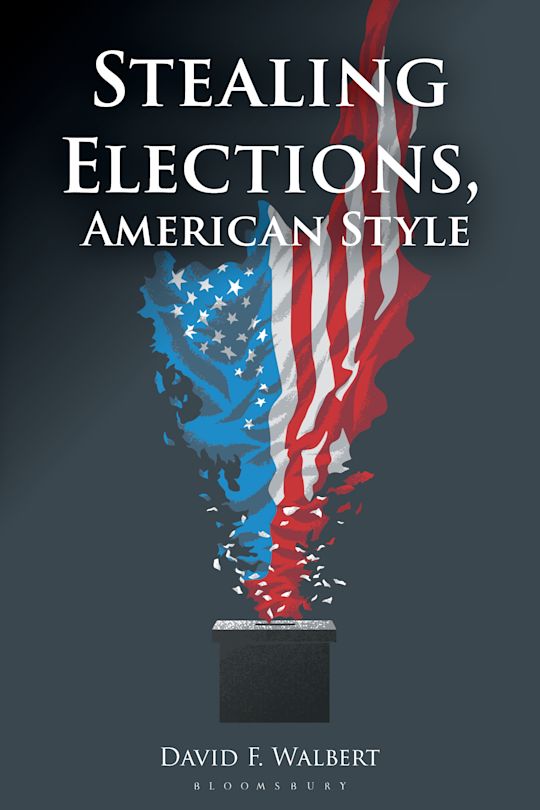
His 2026 work, Stealing Elections, American Style, provides a comprehensive post-mortem of the various schemes used to rig or manipulate American democracy throughout history. Drawing on his unparalleled experience arguing voting cases before the U.S. Supreme Court, Walbert meticulously traces the evolution of election theft from the "stolen presidency" of 1876 through to the 21st-century "Stop the Steal" movement.

Walbert utilizes this historical perspective to argue that contemporary voter suppression is not a new phenomenon, but rather a sophisticated update to an "old playbook" designed to silence the public will.

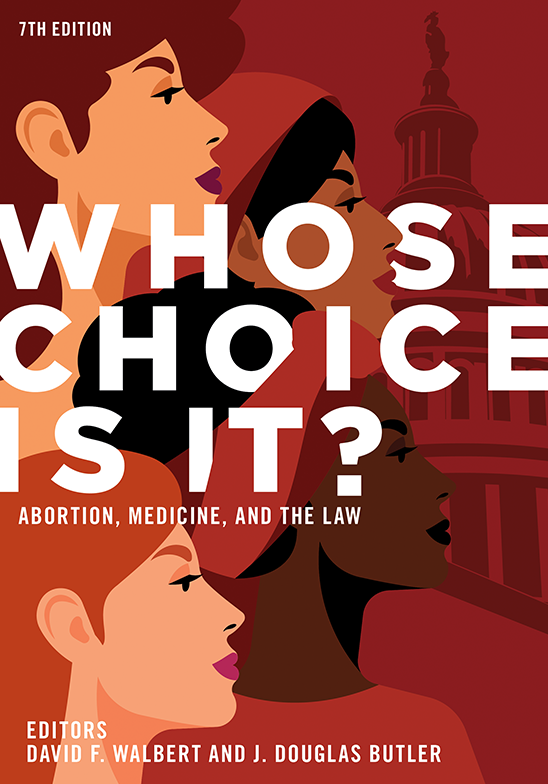
Beyond his focus on election integrity, his broader contributions include co-editing the influential volume Whose Choice Is It? Abortion, Medicine, and the Law (7th Edition) published by the American Bar Association in 2021. It is a comprehensive legal and medical analysis of reproductive health and abortion in the US and internationally. It covers abortion practices, ethics, law, and history, serving as a key resource on abortion access and regulation.

Personal Life and Memberships

Walbert is a member of the American Board of Trial Advocates and the Georgia Trial Lawyers Association. He credits much of his success to his long-standing partnership with his wife, Charlotte, with whom he moved across the country in 1973 to begin his career in Georgia. They have three sons: David, Chris, and Michael.

Education

  • Stanford University (BA)
  • University of Michigan (MS, Physics)
  • Case Western Reserve University (JD)

Clerkship

  • Hon. Gus J. Solomon (D. Oregon)

Key Specialties

  • Voting Rights
  • Constitutional Law
  • Complex Commercial Litigation

Memberships

  • American Board of Trial Advocates
  • Georgia Trial Lawyers Association
  • Bar of the U.S. Supreme Court

Academics

  • Adjunct & Full-Time Faculty at Emory Law

Publications

Advocacy in Print

Stealing Elections, American Style
Sept 2026 Pre-Order Today

Stealing Elections, American Style

Bloomsbury

A comprehensive post-mortem of the various schemes used to rig or manipulate American democracy throughout history. Drawing on unparalleled experience arguing voting cases before the U.S. Supreme Court, Walbert traces the evolution of election theft from the "stolen presidency" of 1876 through to the 21st-century "Stop the Steal" movement.

Chapters Include:

  1. The Tilden-Hayes Election of 1876: A Stolen Presidency
  2. When Georgia Had Three Governors
  3. The Election that Almost Stole a Presidency: Jimmy Carter's 1962 Senate Race
  4. Ten Votes for Me, One for You
  5. Voter Suppression in the 20th Century
  6. The 2000 Bush-Gore Election: A Bloodless Coup
  7. Gerrymandering: Old But Not Forgotten
  8. Stop the Steal! The Presidential Election of 2020
  9. Voter Suppression in the 21st Century
Whose Choice Is It? Abortion, Medicine, and the Law
2021 Amazon

Whose Choice Is It? Abortion, Medicine, and the Law

7th Edition · American Bar Association

A comprehensive legal and medical analysis of reproductive health and abortion in the U.S. and internationally, covering practices, ethics, law, and history. A key resource on abortion access and regulation published by the American Bar Association.

Expertise

Areas of Practice

Voting Rights

Decades of landmark litigation dismantling discriminatory electoral systems across the American South, with multiple U.S. Supreme Court victories.

Constitutional Law

High-stakes constitutional challenges including redistricting, equal protection, and due process cases at the highest levels of the judiciary.

White-Collar Defense

Successful defense in high-profile federal criminal cases, including government corruption and selective prosecution challenges.

Complex Litigation

Medical malpractice, personal injury, environmental law, employment disputes, and commercial litigation with significant recoveries.

Landmark Cases

Defining Legal Victories

Federal Court

Paige v. Gray

Voting Rights · 1974

Filed the first case challenging the at-large election system in Albany, Georgia, successfully dismantling the "winner-take-all" system.

Georgia Supreme Court

Kesterson v. Jarrett

Civil Rights · 2012

Won a landmark 6–1 decision establishing the constitutional right of disabled plaintiffs to be present in the courtroom during the liability phase of their trial.

Federal Court

Arthur Langford Trial

Criminal Defense · 1979–1980

Successfully defended Atlanta City Council member against federal charges of bribery and perjury, ending in a total acquittal on all counts.

Full Acquittal

Career

Five Decades of Impact

1967

Stanford University

Graduates from Stanford University with a Bachelor's degree.

1968

University of Michigan

Completes a Master's degree in physics before pivoting to law.

1972

Case Western Reserve University

Graduates top of class from law school. Editor-in-Chief of the Law Review.

1972–73

Federal Clerkship

Clerks for the Honorable Gus J. Solomon, U.S. District Court for Oregon.

1973

Moves to Georgia

Joins Georgia Indigent Legal Services (GILS) as a poverty lawyer specializing in housing and civil rights.

1974

Paige v. Gray

Files first landmark voting rights case, challenging the at-large election system in Albany, Georgia.

1975

Albany Victory

Triumphs in the Albany trial, securing ward-based voting.

1976

Private Practice

Leaves GILS to enter private practice. Co-founds boutique firm in Atlanta. Tries the Thomas County at-large voting case.

1978

Burke County Trial

Represents Herman Lodge in the historic Burke County trial, challenging systemic exclusion of Black voters.

1979–80

Arthur Langford Defense

Successfully defends Atlanta City Council member in federal bribery and perjury trial. Total acquittal on all counts.

1982

Rogers v. Lodge — Supreme Court

Argues before the U.S. Supreme Court. Wins landmark 6–3 victory strengthening the Voting Rights Act.

1982

Congressional Testimony

Testifies before U.S. House and Senate Judiciary Committees, advocating for the "results test" amendment to the Voting Rights Act.

1982

Busbee v. Smith

Challenges Georgia's congressional redistricting plan, uncovering direct evidence of racial animus in the legislature.

1988–95

The Judicial Case

Serves as special counsel for the State of Georgia, defending the method of electing superior court judges.

1995

Miller v. Johnson — Supreme Court

Argues before the Supreme Court in defense of race-conscious redistricting for Georgia's 11th Congressional District.

2003

Georgia v. Ashcroft — Supreme Court

Argues before the Supreme Court, establishing the constitutional validity of "influence districts" under the Voting Rights Act.

2012

Kesterson v. Jarrett

Wins landmark 6–1 Georgia Supreme Court decision on the rights of disabled plaintiffs in the courtroom.

2021

Whose Choice Is It? Published

7th edition of the ABA's comprehensive analysis of reproductive rights and abortion law published.

2021

Georgia Legislative Testimony

Testifies before the Georgia Legislative Special Committee on Elections regarding new voting restrictions.

2026

Stealing Elections, American Style

Publishes comprehensive account of election manipulation throughout American history.

Scholarship

Academic Papers

Get in Touch

Contact

For legal inquiries, media requests, or speaking engagements, please fill out the form below.

Thank you for your message. We will be in touch shortly.

Stealing Elections, American Style — Available Sept 2026 Pre-Order