David F. Walbert

Over a five-decade career, David F. Walbert evolved from a student of theoretical physics into a nationally recognized constitutional lawyer.
Often pitted against systemic injustice, Walbert helped fundamentally reshape the political landscape of Georgia and the American South through high-stakes litigation, repeat appearances before the United States Supreme Court, and testimony before Congress.
Academic Foundation: From Physics to the Bar
Walbert's path to the law was unconventional. He holds a physics degree from Stanford and a Master's in physics from the University of Michigan. Originally bound for a career as a physicist, his passion for social justice drew him to the law instead.
He returned home to Case Western Reserve University Law School, where he graduated at the top of his class, served on the National Moot Court Team, and was Editor-in-Chief of the Law Review.
He then clerked for the Honorable Gus J. Solomon of the U.S. District Court for the District of Oregon — a legendary judge whose toughness and commitment to civil liberties left a lasting imprint.
A Career Defined by Voting Justice
In 1973, Walbert moved to Georgia to join Georgia Indigent Legal Services as a poverty lawyer. He quickly became a central figure in the "never-ending fight" to overturn laws designed to maintain white supremacy in the electoral process.
Landmark Litigation & Supreme Court Advocacy
Walbert has been lead counsel in several cases that serve as the bedrock of modern voting rights jurisprudence:
- Rogers v. Lodge (Burke County): Walbert successfully challenged the discriminatory at-large voting system in Burke County, Georgia. He argued the case before the U.S. Supreme Court, securing a historic ruling that allowed courts to infer discriminatory intent from circumstantial evidence.
- Georgia v. Ashcroft: Walbert returned to the Supreme Court to defend Georgia's redistricting plan. The resulting decision established the importance of "influence districts" in protecting minority political power.
- The Albany & Thomas County Cases: He filed the first cases to challenge city-wide and county-wide voting systems in South Georgia, successfully dismantling electoral structures that prevented Black candidates from winning election.
Beyond the Ballot Box: Complex Litigation & Academics
Though best known for his voting rights work, Walbert's practice spanned the full spectrum of complex litigation — high-profile medical malpractice, product liability, white-collar criminal cases, and class actions. With co-counsel, he secured the acquittal of Atlanta City Council member Arthur Langford in a federal bribery case and represented Reginald Eaves in a selective prosecution challenge that exposed deep-seated biases within federal agencies.
He has also served as both adjunct and full-time faculty at Emory University School of Law.
Advocacy in Print: Literary Legacy
As a law student, Walbert published a seminal study showing that conviction rates differ between six- and twelve-person juries — contradicting the Supreme Court's assumption when it upheld six-person juries as constitutional.
With fellow law student Dr. J. Douglas Butler, he co-edited Abortion, Society and the Law, a comprehensive anthology on the subject. They continued collaborating across several editions of the anthology, culminating in the 2021 treatise Whose Choice Is It? — featuring world experts on every aspect of abortion and contraception across cultures, past and present.
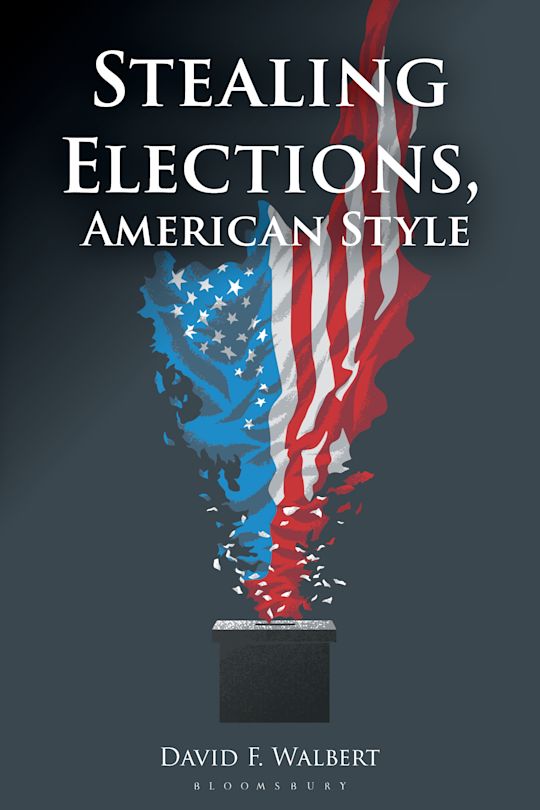
Walbert's 2026 book, Stealing Elections, American Style, is narrative-driven and steeped in historical context. He traces voter suppression and stolen elections from the country's founding to today — pairing stories of the most outlandish frauds with an explanation of how elections are stolen by disqualifying voters and rigging the rules. Drawing on decades of litigating voting cases, arguing before the Supreme Court, and teaching constitutional law, Walbert gives readers a deep grasp of today's voting battles.
Personal Life and Memberships
Walbert is Senior Counsel at the Atlanta law firm Parks, Chesin, and Walbert, and a member of the bars of the State of Georgia and the United States Supreme Court, among others. He is a trustee of the Georgia Legal History Foundation and a member of several other legal organizations. He credits much of his success to his long-standing partnership with his wife, Charlotte, and the support and constant fun enjoyed with their three sons, David, Chris, and Michael.
Education
- Stanford University (BS, Physics)
- University of Michigan (MS, Physics)
- Case Western Reserve University (JD)
Clerkship
- Hon. Gus J. Solomon (D. Oregon)
Key Specialties
- Voting Rights
- Constitutional Law
- Complex Litigation
Memberships
- State Bar of Georgia
- American Board of Trial Advocates
- Georgia Trial Lawyers Association
- Bar of the U.S. Supreme Court and other federal courts
- Georgia Legal History Foundation, Trustee
Academics
- Past Assistant and Adjunct Professor, Emory University School of Law